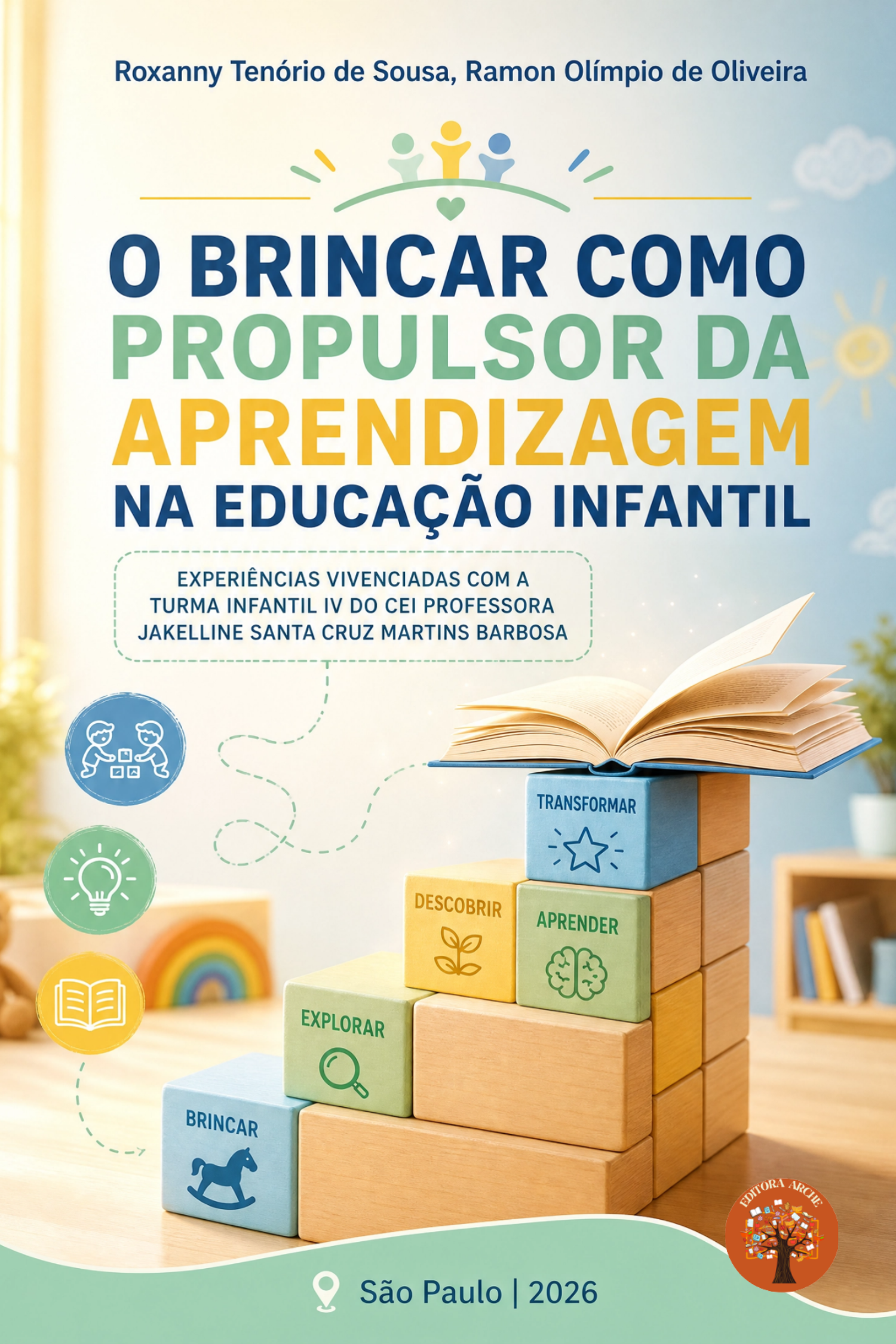
PLAY AS A DRIVER OF LEARNING IN EARLY CHILDHOOD EDUCATION: EXPERIENCES WITH THE "INFANTIL IV" CLASS AT CEI PROFESSORA JAKELLINE SANTA CRUZ MARTINS BARBOSA
Keywords:
Learning. Play. Comprehensive development. Early childhood education. Playful practices.Abstract
This research addressed a topic of great relevance to education. Play plays a central role in early childhood education, recognized as a fundamental element for children's comprehensive development. Studies have shown that playful activities foster not only socialization and emotional expression, but also the development of meaningful knowledge and cognitive skills. The objective of this research was to analyze how play acted as a driver of learning in the Infant IV class at CEI Professora Jakelline Santa Cruz Martins Barbosa, from 2019 to 2022, based solely on experiences lived by the author. The study used a qualitative approach, based on participant observation and systematic recording of the activities developed. Planned playful interventions were implemented, including symbolic games, role-playing, storytelling, and body language activities, accompanied by detailed notes on the children's behaviors, interactions, and responses. The results indicated that structured play promoted greater autonomy, creativity, and child empowerment, in addition to stimulating language, logical reasoning, and interpersonal relationships. It was concluded that play constituted an effective pedagogical tool for enhancing learning, fostering the child's comprehensive development. The experience demonstrated that intentional playful practices, mediated by attentive educators, provided inclusive and stimulating learning environments, reinforcing the importance of educational policies that value play as a central axis of early childhood education.
Downloads
Downloads
Published
How to Cite
Issue
Section
Categories
License
Atribuição CC BY
