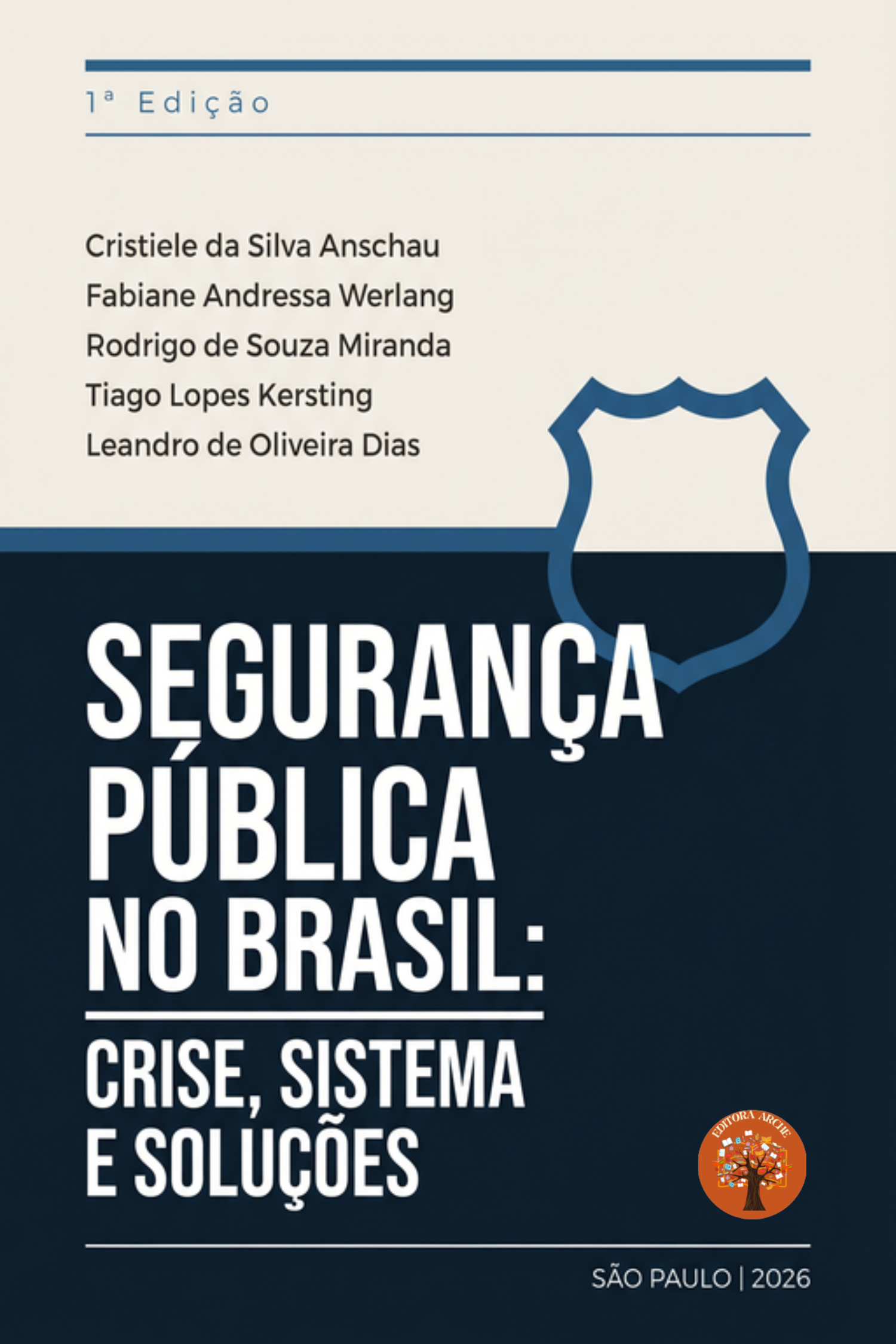
PUBLIC SECURITY IN BRAZIL: CRISIS, SYSTEM, AND SOLUTIONS
Keywords:
Public security. Criminality. Urban violence. Public policies. Criminal justice system. Prevention. Organized crime.Abstract
This study analyzes public security in Brazil from a structural perspective, highlighting the main factors contributing to the current crisis in the sector, as well as the challenges and possible solutions for overcoming it. The research is based on the understanding that violence in the country is not an isolated phenomenon, but rather the result of a set of interdependent elements involving social inequality, exclusion, institutional fragility, and limitations in the formulation and implementation of public policies.
Initially, the evolution of criminality and the consolidation of a scenario marked by high levels of violence are discussed, demonstrating the inability of the traditional model, predominantly repressive, to provide effective and lasting responses. Subsequently, the structure of the Brazilian public security system is analyzed, based on the Federal Constitution of 1988, highlighting institutional fragmentation, the lack of integration among agencies, and the impacts of this disarticulation on the efficiency of state actions.
The study also addresses the main causes of criminality, with emphasis on social inequality, failures in the educational system, disordered urbanization, and the expansion of organized crime, especially regarding drug trafficking. Furthermore, the shortcomings of the criminal justice system and the penitentiary system are examined, revealing procedural delays, the perception of impunity, and the ineffectiveness of resocialization policies.
Finally, the study proposes pathways to overcome the crisis, advocating for the adoption of an integrated public security model based on evidence and guided by strategic intelligence. It highlights the importance of intersectoral public policies, investments in prevention, the valorization of security professionals, and the incorporation of technologies a fundamental elements for building a more efficient and sustainable system.
It is concluded that overcoming the public security crisis in Brazil depends on a structural transformation that goes beyond the immediate fight against crime and directly addresses its root causes, promoting social inclusion, institutional strengthening, and the guarantee of fundamental rights.
Downloads
Downloads
Published
How to Cite
Issue
Section
Categories
License
Atribuição CC BY
