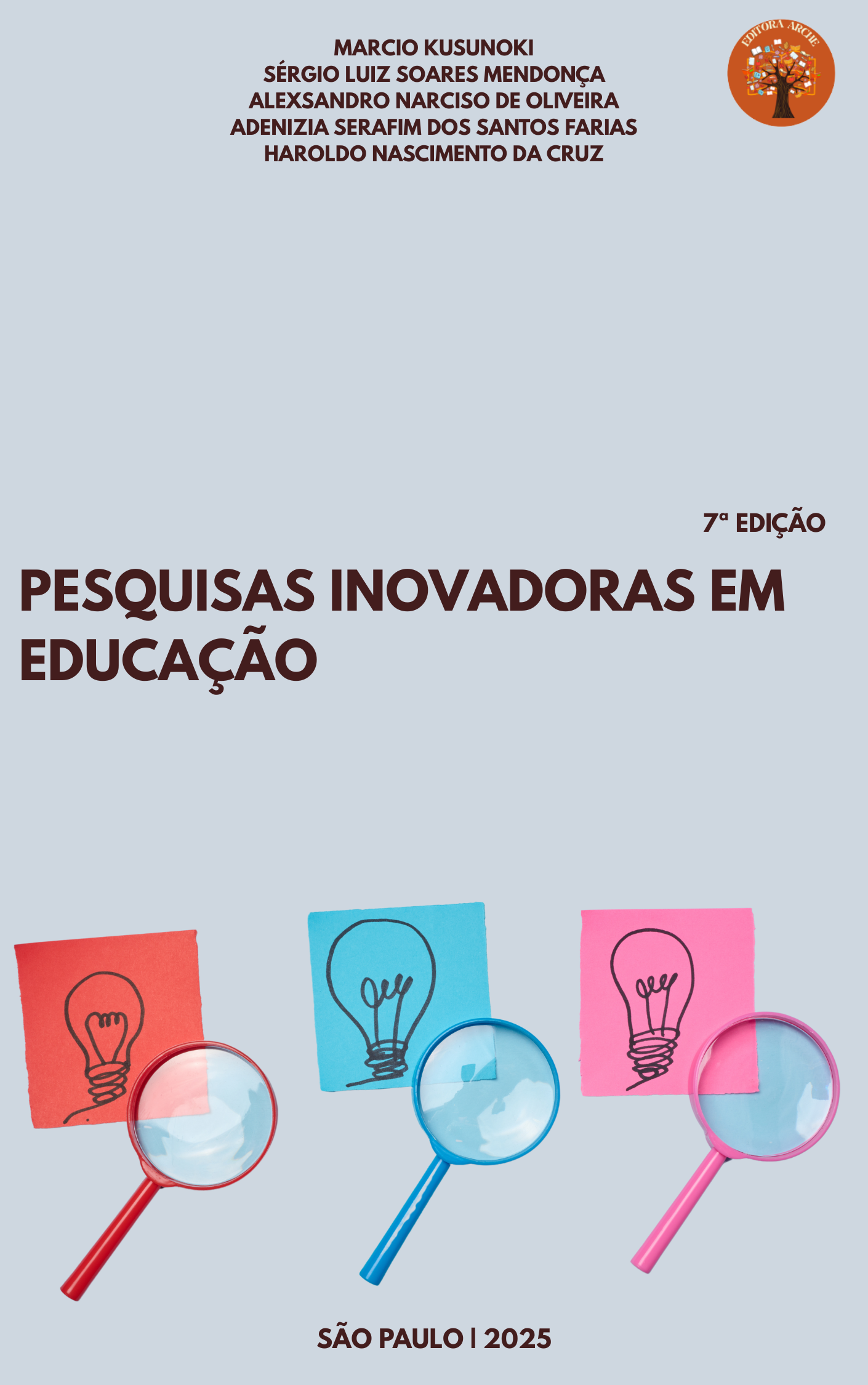
INNOVATIVE RESEARCH IN EDUCATION
7th Edition
Keywords:
Educational Technology. Digital Inclusion. Artificial Intelligence in Education. Maker Culture.Abstract
This book brings together a collection of articles that discuss the main contemporary transformations in the field of education, especially with regard to the incorporation of digital technologies, artificial intelligence, neuroscience and innovative pedagogical practices. The aim of the e-book is to provide the reader with a broad, critical and interdisciplinary understanding of the possible paths towards a more inclusive, personalized education that is aligned with the demands of the 21st century.
In Chapter 01, "Digital Media and the Inclusion of Students with Disabilities in Education", the discussion focuses on the importance of the conscious and accessible use of digital media as an instrument for promoting educational equity. The article proposes reflections on how technologies can act as allies in addressing the barriers that historically exclude students with disabilities from the teaching and learning processes.
In Chapter 02, "Challenges in Distance Education: The Inclusion of Artificial Intelligence as an Agent of Transformation", she analyzes the impacts of artificial intelligence in distance learning, highlighting its contributions to the personalization of learning, while discussing the ethical dilemmas and challenges of the centrality of the human in this new educational model.
In Chapter 03, "From Theory to Practice: Inserting Technologies in the School Curriculum", Alessandra da Cunha Aguiar Fonseca discusses the role of the school curriculum in the digital age and the challenges faced by teachers in the integration of Digital Information and Communication Technologies (TDIC), proposing strategies for a more meaningful and contextualized education.
Chapter 04, "Implementation of Maker Culture in Education: Sustainable Pedagogical Character", by Jacqueline Pharlan de Camargo, presents maker culture as an active and sustainable pedagogical proposal, addressing its potential to transform teaching and promote critical and innovative awareness in students.
Chapter 05, "Neuroscience, Education and Technology: A Literature Review", written by Marcia Correa Miguel, provides an in-depth analysis of neuroplasticity and its implications for learning, highlighting how technology can be used to personalize teaching based on neuroscientific discoveries.
In Chapter 06, "Digital Culture and Technological Integration in the Educational Sphere", Erica Aparecida Julião Magalhães discusses the impact of cultural transformations driven by technology, highlighting methodologies such as gamification, hybrid learning and peer-to-peer instruction, which transform the traditional educational process.
Chapter 07, "Enhancing Education: The Impact of Artificial Intelligence on Learning", by Maria Aparecida Soares Teixeira, revisits the theme of AI, focusing on its multiple possibilities in the in-person educational environment, as a tool to support personalization, inclusion, accessibility and the development of skills for the 21st century.
This collection aims to provoke reflection and offer theoretical and practical support for educators, researchers and managers who seek to understand and act strategically in the face of the challenges and opportunities that digital technologies impose on the educational field. It is a work that recognizes the power of innovation, but reaffirms the commitment to a humanized, inclusive and transformative education.
Downloads
Downloads
Published
How to Cite
License
Atribuição CC BY
