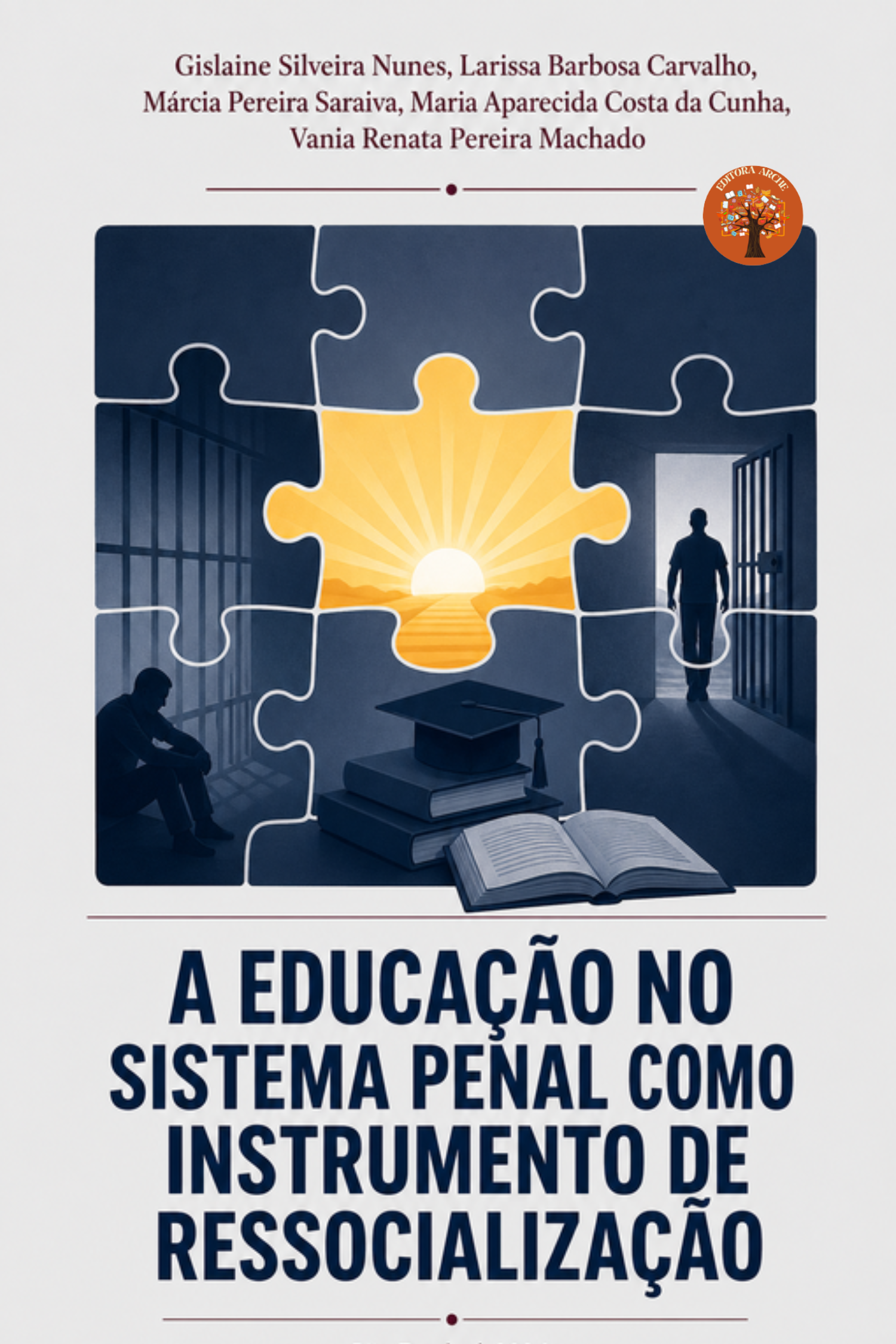
EDUCATION IN THE PENAL SYSTEM AS AN INSTRUMENT OF RESOCIALIZATION
Keywords:
Criminal justice system. Prison education. Rehabilitation. Human rights.Abstract
This work aims to present historical, cultural, and educational aspects of the indigenous peoples in Brazil, from the arrival of the Portuguese who colonized Brazil and had immediate encounters with the indigenous people around the year 1500. These indigenous peoples still possessed their own customs, distinct cultural forms, conceptions, and means of communication, which were practically extinguished by the Portuguese dictatorship of communication. The model and doctrine of colonization that the Portuguese implemented for over 400 years decimated cultures, behaviors, and ways of survival. The use of the Portuguese language was primarily employed as a form of total control, inhibiting communication, development, and even existence. The fact is that, today, at this very moment, we are not giving the necessary importance to the topic. Indeed, it is clear that the discussion is not a relevant topic, and meanwhile, effective solutions for indigenous peoples are being implemented across generations. Educational investment as a right, and not as a welfare policy, could help in this process.
Downloads
Downloads
Published
How to Cite
License
Atribuição CC BY
