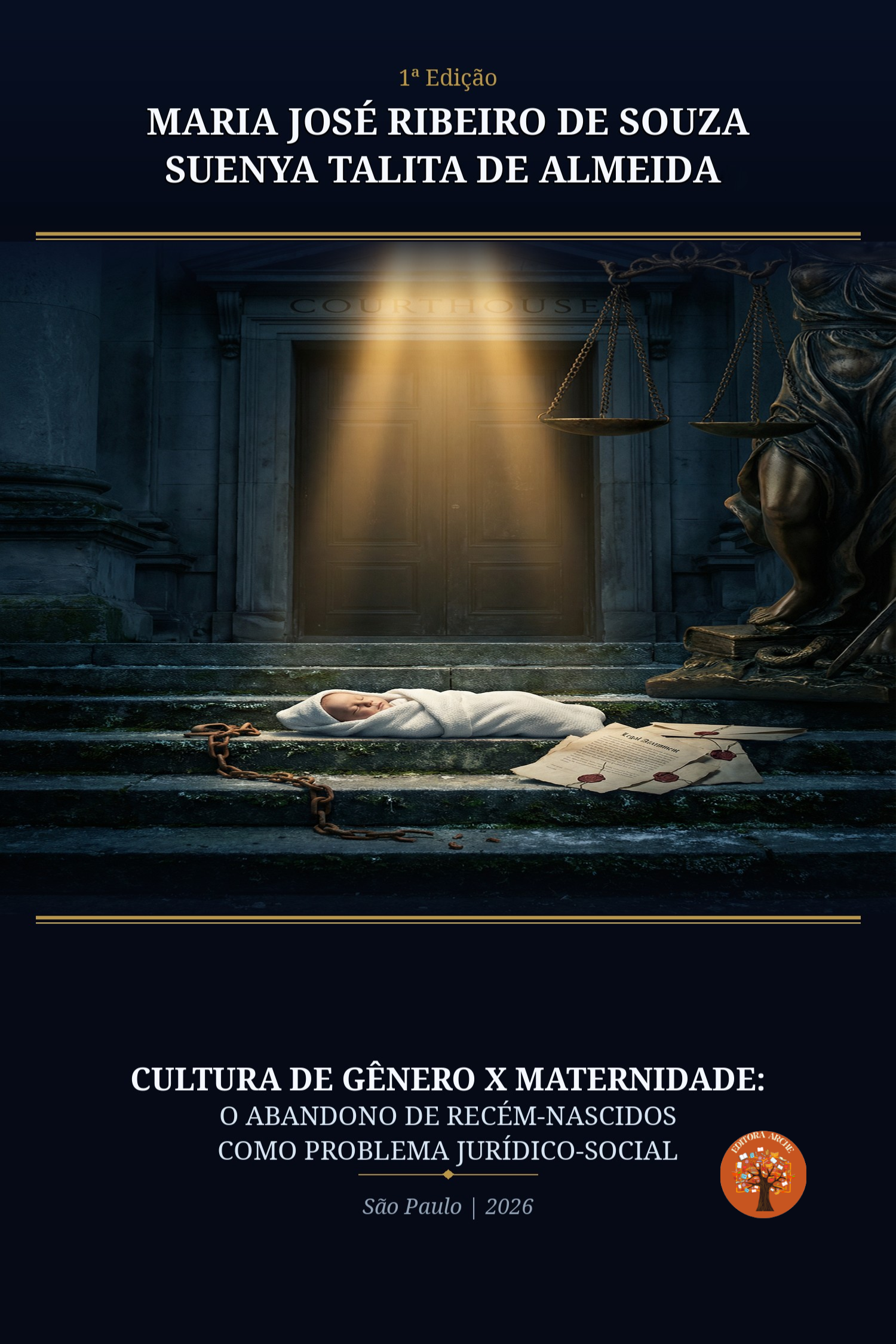
GENDER CULTURE VS. MOTHERHOOD: THE ABANDONMENT OF NEWBORNS AS A LEGAL AND SOCIAL PROBLEM
Keywords:
Right not to be a mother. Postpartum period; Fundamental rights of women. Criminalization of motherhood.Abstract
This dissertation aimed to analyze the abandonment of newborns in the context of the postpartum period, from the perspective of the fundamental rights of women not to want to exercise motherhood and of the child, as it is the State's duty to guarantee their protection and care in the face of this legal and social institution. According to the regulations established by the Child and Adolescent Statute (ECA), children in vulnerable situations are prioritized for placement in care. Data from the National Secretariat of Social Assistance (SNAS) from 2025 indicate that in Brazil, approximately 93.8% of children are in institutional care, in shelters or orphanages, and about 6.2% are in family care, according to what is registered in the National Adoption and Placement System (SNA). This statistical information includes goals established by the National Council of Justice (CNJ), by judges and children's groups, aiming to increase the number of adoptions to 25% of children placed in care after abandonment. Therefore, a critical reflection is proposed on the criminal responsibility of women in situations marked by vulnerability and the absence of effective gender-based public policies. Thus, the objective of this dissertation was to develop an analytical-critical understanding in order to clarify how the Law can cease to be merely an instrument of punishment and begin to act as a field of support, recognition, and reparation for women who do not wish to exercise motherhood. In this context, this study is characterized as a Dogmatic/Bibliographic and Theoretical-Empirical Legal Research, of a theoretical-documentary nature, which develops through the normative, doctrinal, and jurisprudential analysis of the institutions of adoption, legal surrender; abandonment of an incapacitated person, and the empirical idea of the right not to exercise motherhood, within the social context of gender responsibility. It starts from the observation that, despite the legal support for voluntary surrender for adoption, this alternative remains largely inaccessible and socially stigmatized. Abandoning a newborn is indeed a crime, as defined in Article 134 of the Brazilian Penal Code; in response, some states have implemented the "Safe Haven" Law (Adoption Law No. 13.509/2017). However, the abandonment of newborns in the context of the postpartum period was identified in this study as a practice that is being socially produced, legally regulated, and institutionally silenced.
Downloads
Downloads
Published
How to Cite
License
Atribuição CC BY
