TEACHING TO RESOCIALIZE: EDUCATIONAL PERSPECTIVES IN THE CONTEXT OF INCARCERATION
Keywords:
Prison education. Resocialization. Human rights.Abstract
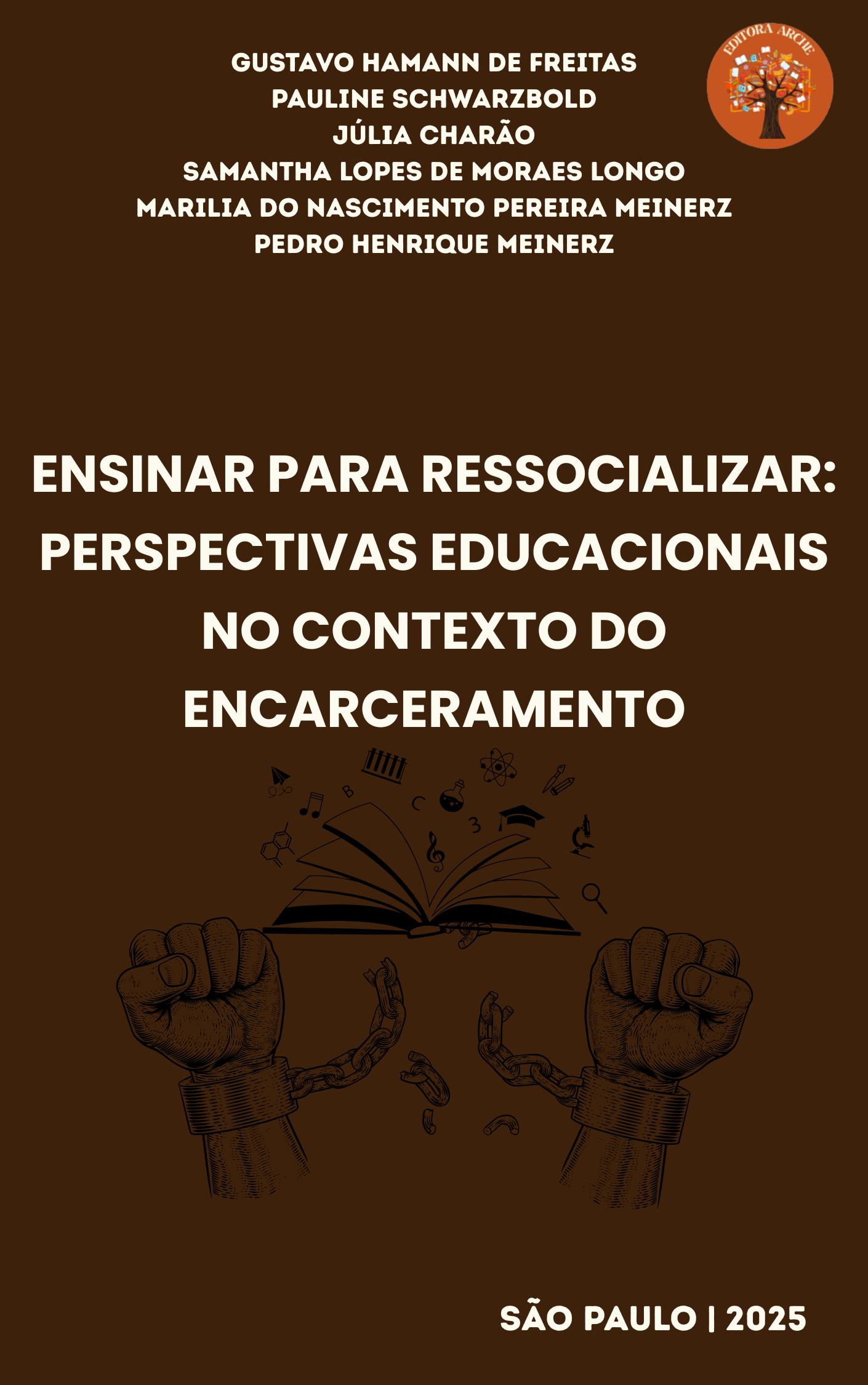
Education, in any social context, represents an essential tool for building citizenship, human development and transforming realities. When applied to the prison system, this educational practice takes on new contours, requiring sensitivity, technical preparation and commitment to the dignity of individuals who, despite being deprived of their freedom, maintain the right to access knowledge and the hope of rebuilding their trajectories. This digital book, entitled "Teaching to Reintegrate: Educational Perspectives in the Context of Incarceration", was created with the purpose of provoking reflections, systematizing knowledge and presenting possible paths for educational action in prison environments.
The work is organized into seven chapters, each one dedicated to a specific dimension of the theme, addressing everything from the structural aspects of the Brazilian prison system to innovative experiences in education in prison. Chapter 01 – Brazilian Prison System: Reality and Contexts offers a critical overview of the functioning of prison units in Brazil. Topics such as overcrowding, violation of rights, precariousness of spaces and the absence of effective public policies aimed at the social reintegration of prisoners are discussed.
Chapter 02 – Education and Human Rights in the Prison Environment, delves into the field of legal guarantees and normative frameworks that ensure the right to education within prisons. International documents and national legislation that establish the obligation of educational provision are addressed, in addition to discussing the practical barriers to its implementation, such as the lack of structure, institutional prejudice and invisibility of incarcerated individuals.
Next, Chapter 03 – School Culture in Prisons examines the daily educational practices in prison units. This chapter proposes reflections on the relationships between teachers and students deprived of liberty, the school curriculum adapted to prison, the use of alternative methodologies, and the resistance faced by professionals who work in this space. Based on real experiences, the aim is to understand how school culture is configured within the walls and what meanings it acquires in this specific context.
Chapter 04 – Teacher Training for the Prison System is dedicated to analyzing the profile and training needs of educators who work in prisons. The pedagogical, ethical and emotional skills required in this environment are discussed, in addition to the gaps in undergraduate and continuing education courses that often do not cover the complexity of pedagogical work in prisons. Critical and humanized teacher training is considered a key element in promoting transformative education.
Chapter 05 – Youth and Adult Education (EJA) in Prisons highlights the strategic role of this teaching modality as a concrete possibility of accessing knowledge, valuing identity and building new life projects. The text discusses the specificities of EJA in places of deprivation of liberty, its potential and its obstacles, proposing an analysis of the importance of contextualized pedagogical practices that respect the diversity of the subjects involved.
Chapter 06 – The Role of Education in Reintegration deals directly with the relationship between education and the processes of social reintegration. Experiences are presented that demonstrate how access to schooling can change future perspectives, reduce criminal recidivism and favor the return to coexistence in society. Reintegration is understood here not as an end in itself, but as an ongoing process that needs to be anchored in articulated public policies committed to human dignity.
Finally, Chapter 07 – Educational Alternatives and Innovations in the Prison Context points to new possibilities in the field of prison education. Educational technologies, active methodologies, interdisciplinary projects and partnerships with external institutions are some of the strategies analyzed. This chapter seeks to encourage the reader to imagine and build creative and effective pedagogical practices that overcome punitive logic and open space for an emancipatory education.
This book was written with the intention of contributing to researchers, education professionals, public administrators, prison officers and others interested in the subject. Each chapter aims to shed light on aspects that are often neglected in public debates, but which are fundamental to building a more just, inclusive and democratic society. May this reading inspire changes, strengthen initiatives and provoke new questions about the role of education in building possible paths, even where everything seems limited.
Downloads
Downloads
Published
How to Cite
License
Atribuição CC BY
