THE IMPORTANCE OF FORMAL EDUCATION PRACTICE IN PRISONS
Keywords:
Prison system. Education of inmates. Resocialization.Abstract
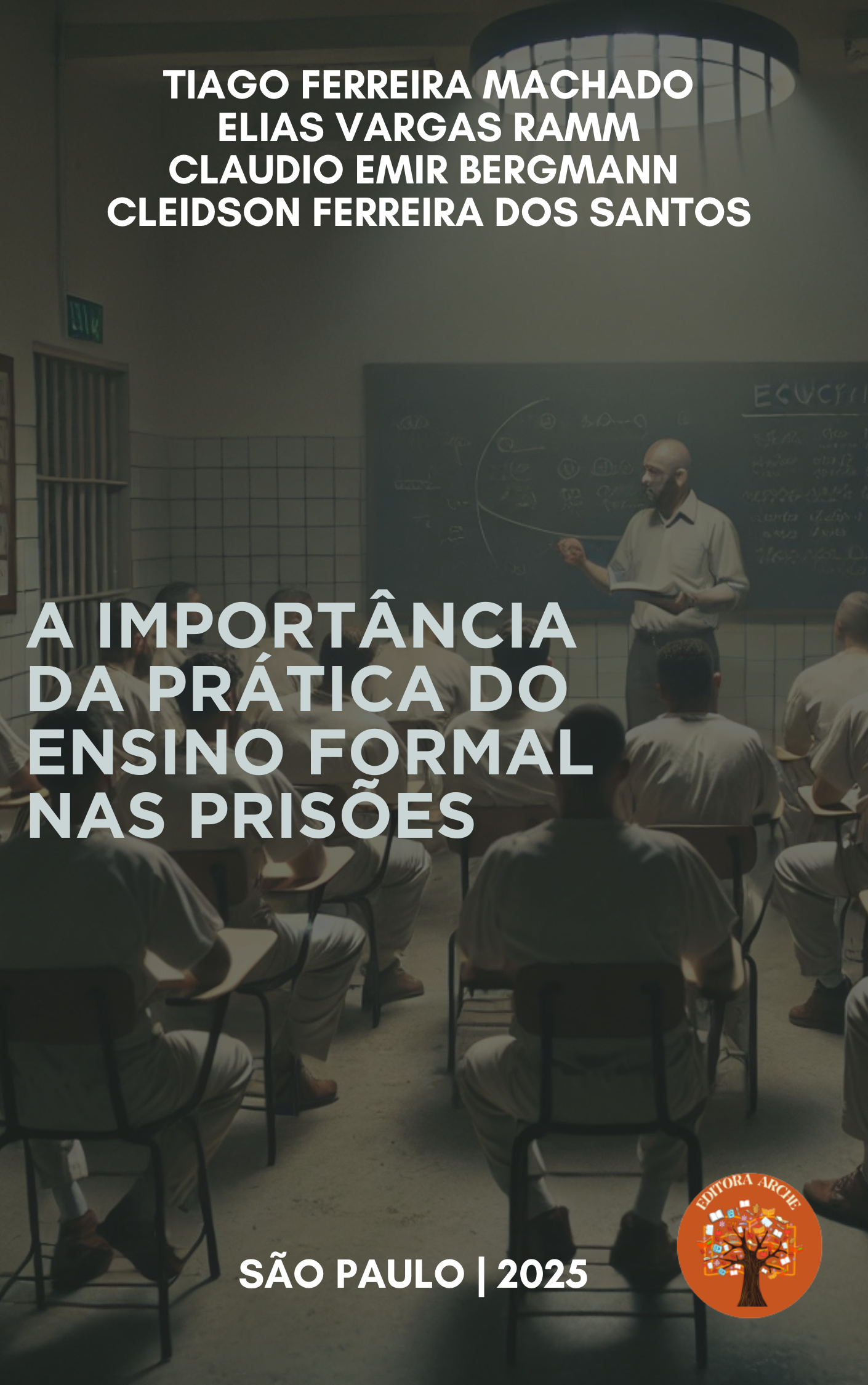
Education is one of the fundamental pillars for building a more just and egalitarian society. However, when it comes to the prison population, guaranteeing this right still faces numerous challenges, from the lack of effective public policies to structural barriers within prison units. The book The Importance of Formal Education Practice in Prisons seeks to delve deeper into this issue, offering a critical analysis of the role of education in the prison system and its relevance for the social reintegration of inmates.
Throughout the chapters, essential aspects are discussed to understand the context of formal education within prisons, including social inequalities that impact access to education, the difficulties faced in the prison environment and the benefits of education in reducing criminal recidivism. The central proposal of the work is to highlight how education can be an instrument of transformation, not only for incarcerated individuals, but also for society as a whole.
Chapter 1, Education, Inequality and the Prison System: Reflections on Access to Education and the Role of Punishment in Society, presents an overview of educational inequalities that precede incarceration. Data shows that most people deprived of liberty have a history of poor schooling, often interrupted in childhood or adolescence. This reality reflects a structural problem, in which the lack of access to education is directly related to social vulnerability and the increase in crime.
In addition, this chapter addresses the way society views punishment and resocialization. In many cases, the prison population is seen as irredeemable, reinforcing punitive policies that do little to contribute to social reintegration. By analyzing the concepts of punishment and education, it is clear that education can play a fundamental role in rebuilding the identity of inmates, offering them new perspectives and opportunities.
Chapter 2, Structural Complexity in Prisons, explores the concrete difficulties in implementing education within prison units. Many prisons do not have adequate classrooms, teachers trained to work in this context, or even sufficient teaching materials. In addition, the prison routine poses challenges that make it difficult for inmates to engage in formal education.
Another aspect addressed in this chapter is institutional and social resistance to education in prisons. In some facilities, the provision of education is still seen as a privilege rather than a right, which results in a lack of incentive to create and maintain educational programs. Prison overcrowding and internal violence are also factors that hinder the development of continuous and structured pedagogical activities.
Chapter 3, Education and its Offering in the Prison Environment, presents an overview of public policies aimed at prison education in Brazil. Brazilian legislation provides for the right to education for people deprived of liberty, but the implementation of these policies is still uneven among states and municipalities. Programs such as Youth and Adult Education (EJA) and the National Exam for Certification of Youth and Adult Skills (Encceja) are some of the initiatives that seek to guarantee this right.
Despite these initiatives, there are numerous challenges. The turnover of prisoners, the lack of continuity in educational programs, and the absence of adequate pedagogical support compromise the effectiveness of education in the prison system. In addition, there is a lack of policies that encourage the continuation of studies after release from prison, which limits opportunities for social reintegration. This chapter also discusses the positive impact of education on the lives of prisoners. Studies indicate that the provision of education in prisons contributes significantly to the reduction of criminal recidivism, as it enables the construction of new perspectives in life. Prisoners who have access to education develop greater autonomy, expand their cognitive skills, and acquire tools to enter the job market after serving their sentence. In addition to academic training, prison education also plays a crucial role in the emotional and psychological development of prisoners. The learning environment allows reflections on the past, encourages the construction of new life projects, and promotes the appreciation of human dignity. This process is essential for incarcerated individuals to see themselves as individuals capable of overcoming their criminal history and reintegrating into society.
It is important to emphasize that prison education should not be seen as a palliative measure, but rather as a structured and ongoing public policy. The democratization of education within prisons requires investments in infrastructure, teacher training, and pedagogical strategies that consider the specific needs of this population.
In addition, it is essential that society as a whole understands the importance of education for the reintegration of inmates. Often, resistance to offering education in prisons comes from a punitive view that disregards the transformative potential of education. By guaranteeing the right to education, we are investing in the construction of a more humane and efficient penal system.
In view of the above, The Importance of Formal Education Practice in Prisons seeks to contribute to the debate on the role of education in the prison system, bringing reflections based on studies, data, and concrete experiences. The work emphasizes that education is an inalienable right and that its implementation in prisons not only benefits incarcerated individuals, but also strengthens public safety and social cohesion.
Que este livro sirva como um instrumento de conscientização e mobilização, incentivando a implementação de políticas mais eficazes para a educação no sistema prisional. O ensino nas prisões não deve ser visto como um privilégio, mas sim como uma ferramenta essencial para a construção de um futuro mais justo e inclusivo.
Tiago Ferreira Machado
Elias Vargas Ramm
Claudio Emir Bergmann
Cleidson Ferreira dos Santos
Downloads
Downloads
Published
How to Cite
License
Atribuição CC BY
