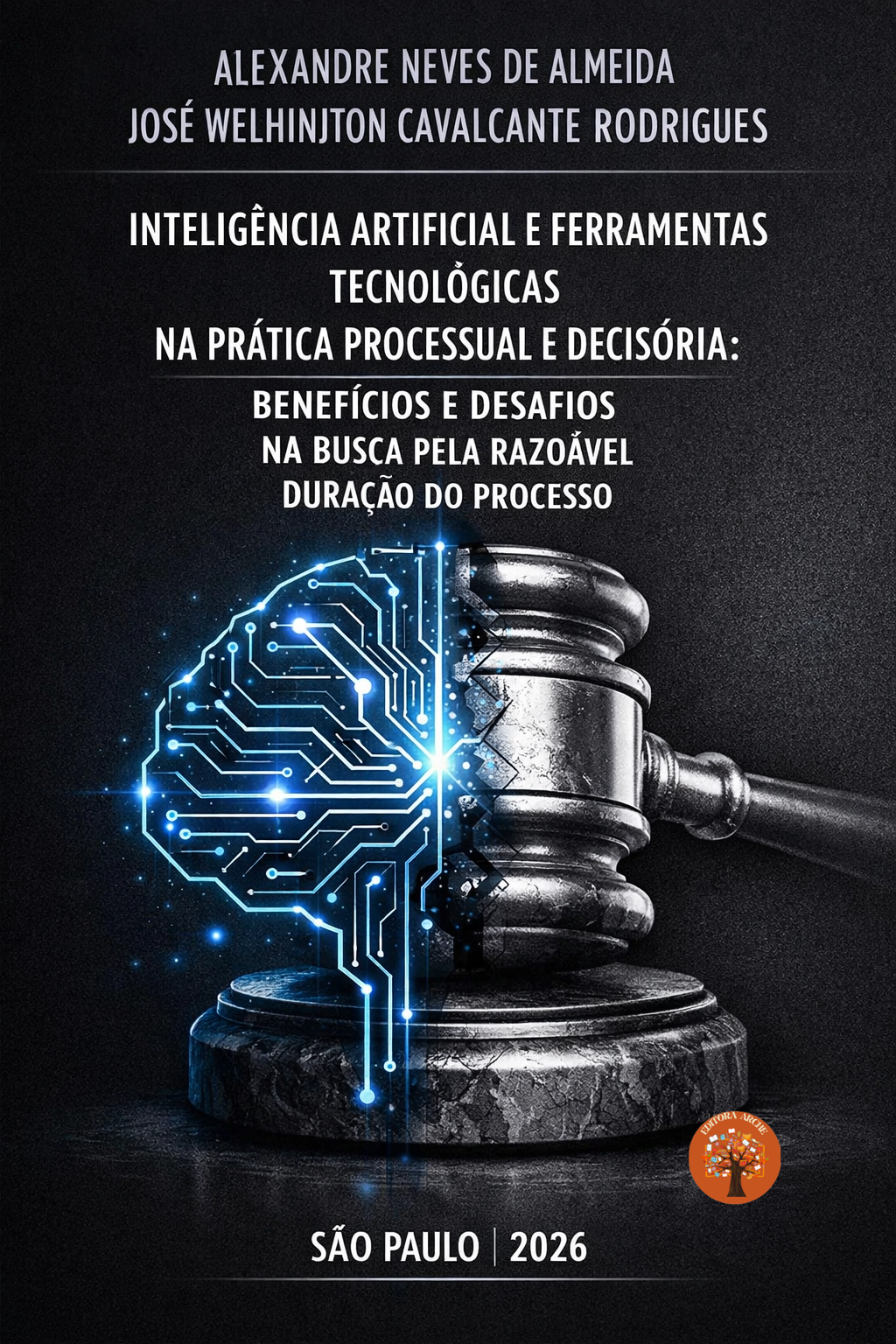
ARTIFICIAL INTELLIGENCE AND TECHNOLOGICAL TOOLS IN PROCEDURAL AND DECISION-MAKING PRACTICE: BENEFITS AND CHALLENGES IN THE PURSUIT OF A REASONABLE PROCESS DURATION
Keywords:
Keyword: Electronic acts. Computerization of the judicial process. Judicial technology. Artificial intelligence and the process.Abstract
In the current scenario of the century in which we live, gradual changes are evident in the legal environment, where these changes are notably carried out in activities where the application of technological means and artificial intelligence (AI) is possible. From this perspective, this work raises the following research question: how do Artificial Intelligence and new technologies contribute to procedural speed, and what ethical and legal challenges still need to be faced in their implementation? The general objective of this work is to analyze to what extent technological tools and Artificial Intelligence can assist the judicial system in automating tasks and issuing judicial decisions, and the obstacles to be faced. The specific objectives were: i. to present the guiding concepts and principles of the judicial system regarding procedural speed; ii. to evaluate the impact of the 4.0 Revolution on Law in the Judiciary, regarding AI and digital transformation, aiming to identify opportunities, benefits, and guidelines for an efficient legal system in the digital age; and iii. This study investigates the automation of judicial pronouncements through technological tools, AI, and robotics applied to law, evaluating the impact of these technologies on decision-making processes, as well as the ethical and legal challenges related to the evaluation of AI in the Judiciary. This study is justified by the coexistence of rapid technological advancement and apparent stagnation in certain judicial practices, demonstrating the importance of AI and new technologies in improving the legal landscape. The study is characterized by a qualitative approach, based on an exploratory literature review, using bibliographic and documentary data collection techniques. This study concluded that AI and new technologies have great potential to optimize the judicial system, speeding up and standardizing decisions through the efficient processing of data and complex analyses, which is already observed in data from the Brazilian Justice system. However, the implementation of AI in law requires caution and strategy due to ethical, legal, and technical challenges. In practice, AI will support judges, increasing efficiency without replacing the human discernment and ethics essential to the judicial function.Downloads
Download data is not yet available.
Downloads
Published
2026-03-25
How to Cite
Almeida, A. N. de, & Rodrigues, J. W. C. (2026). ARTIFICIAL INTELLIGENCE AND TECHNOLOGICAL TOOLS IN PROCEDURAL AND DECISION-MAKING PRACTICE: BENEFITS AND CHALLENGES IN THE PURSUIT OF A REASONABLE PROCESS DURATION. Revista Ibero-Americana De Humanidades, Ciências E Educação, 6(11), 17–182. Retrieved from https://periodicorease.pro.br/rease/article/view/24319
Issue
Section
E-books
Categories
License
Atribuição CC BY
