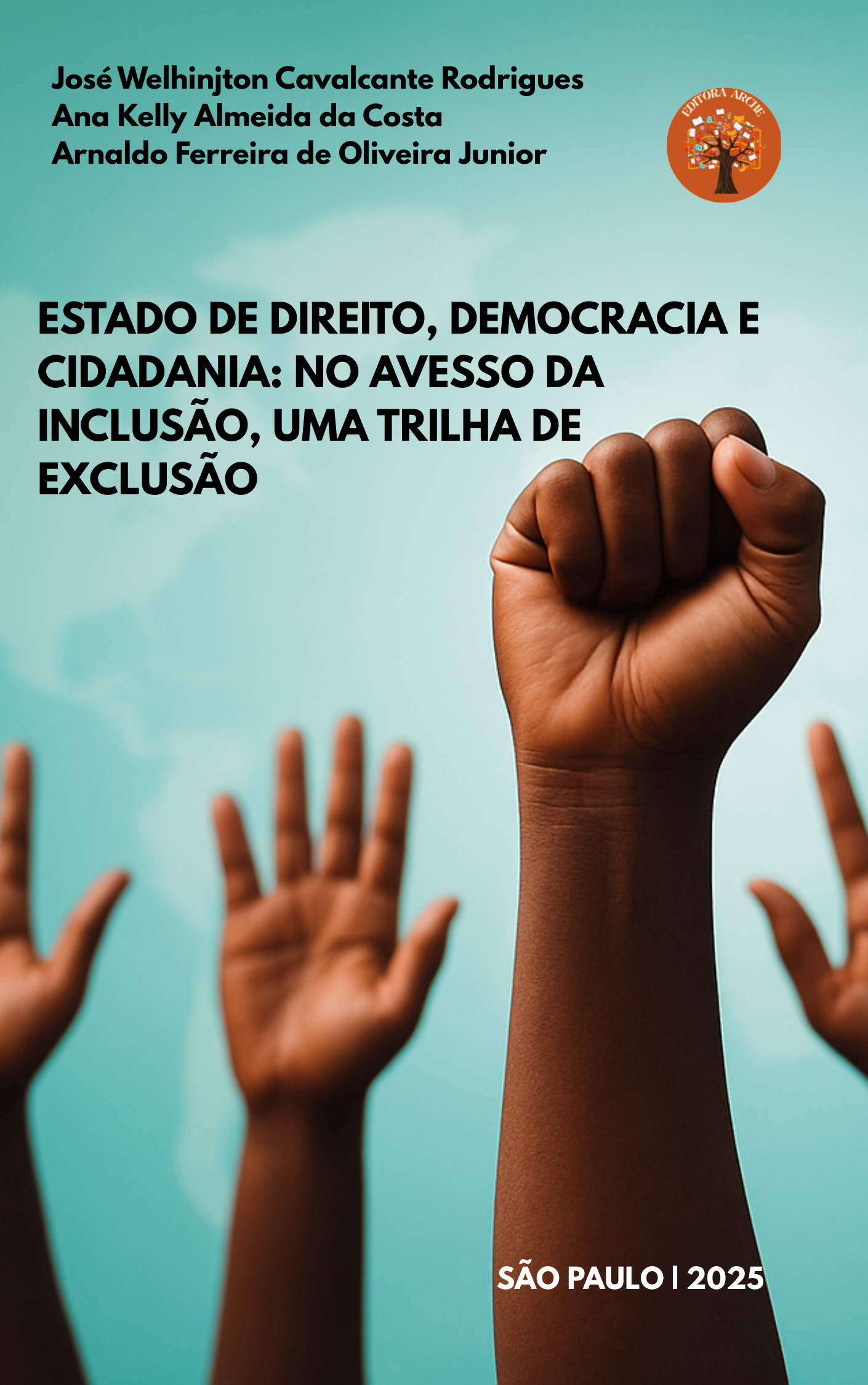
ESTADO DE DIREITO, DEMOCRACIA E CIDADANIA: NO AVESSO DA INCLUSÃO, UMA TRILHA DE EXCLUSÃO
Palavras-chave:
Estado de Direito. Democracia. Cidadania. Inclusão Social.Resumo
Prezado leitor e prezada leitora,
É com imensa satisfação que apresentamos esta obra coletiva, resultado do empenho acadêmico coletivo e da sensibilidade de um grupo de pesquisadores e pesquisadoras comprometidos com as questões sociais mais urgentes do nosso tempo. O livro que agora você lê, seja em formato físico ou digital, representa mais do que um conjunto de artigos acadêmicos, pois é um sincero convite ao diálogo e à reflexão crítica acerca das temáticas da mais urgente importância, razão pela qual são aqui tratadas.
Organizado pelo Professor Dr. José Welhinjton Cavalcante Rodrigues e pelos mestrandos Ana Kelly Almeida da Costa e Arnaldo Ferreira de Oliveira Junior, este livro reúne trabalhos desenvolvidos no âmbito do Mestrado em Ciências Jurídicas da Veni Creator Christian University.
Os textos aqui reunidos nasceram de inquietações legítimas e diversificadas diante das profundas desigualdades, violências e exclusões que marcam a nossa sociedade ao longo da história, especialmente quando são direcionadas às mulheres, às populações negras, às pessoas em situação de vulnerabilidade, aos corpos dissidentes e aos grupos historicamente marginalizados.
Ao passear pelas páginas do livro, é possível encontrar análises profundas, rigorosas e sensíveis acerca de temas urgentes como a violência de gênero, o racismo ambiental, a criminalização da pobreza, a precarização da vida e os desafios que permeiam o acesso à justiça no Brasil.
Cada capítulo demonstra um cuidado e sensibilidade na elaboração, cuidado este que foi adotado para lançar luzes sobre aspectos específicos das problemáticas abordadas, sempre baseado em uma sólida fundamentação teórica, o que inclui o especial destaque para os diálogos estabelecidos com pensadores como Judith Butler, Loïc Wacquant, Anna Loretoni, René Girard, Achille Mbembe e outros, e ainda em dados empíricos que demonstram a urgência das questões abordadas.
Os autores e autoras que compõem esta coletânea são pesquisadores acadêmicos e profissionais que atuam diretamente no sistema de justiça brasileiro, como analistas judiciários, oficiais de justiça, assistentes sociais e defensores públicos, dentre outros. Essa dupla inserção teórica e prática confere aos textos um detalhamento particular, considerando que as reflexões teóricas são constantemente confrontadas com a realidade vivenciada nos tribunais, nas delegacias, nos atendimentos às vítimas de violências e nos espaços do Poder Judiciário.
Este é um espaço que possibilita leituras sobre como o patriarcado estrutura relações de poder que vulnerabilizam mulheres, especialmente mulheres negras, tornando suas vidas "não passíveis de luto", conforme ensina Butler. Além disso, será possível refletir sobre as sutilezas da violência institucional, que muitas vezes se disfarça de neutralidade jurídica para garantir a manutenção do status quo que sempre foi definido pelas classes dominantes.
Através da leitura, será possível compreender como o racismo ambiental distribui desigualmente os riscos e benefícios ambientais, penalizando as populações mais pobres e racializadas. Além disso, há uma reflexão acentuada sobre como a transação penal, aparentemente benéfica, pode esconder mecanismos de controle e criminalização da pobreza. Por outro lado, também será possível compreender como a população em situação de rua é sistematicamente invisibilizada, transformada em "vidas descartáveis" por um Estado que oscila entre a negligência e a repressão.
Mas este livro não se limita a diagnosticar problemas. Ao contrário, cada capítulo aponta caminhos possíveis, ainda que desafiadores, para a construção de uma sociedade mais justa e igualitária, que preze pela efetivação da dignidade humana. Seja através da implementação efetiva de políticas públicas, da aplicação interseccional das leis, do fortalecimento dos mecanismos de proteção de direitos humanos ou da conscientização coletiva sobre as estruturas de opressão, os textos aqui reunidos lembram que a transformação é sempre possível e necessária, apesar de difícil.
Diante disso, convido você, caro e cara leitora, a mergulhar nestas páginas com o pensamento aberto e crítico. Que esta leitura seja capaz de despertar questionamentos e, principalmente, o desejo de contribuir para a construção de um mundo onde todas as vidas importem, onde todas as pessoas tenham acesso à justiça e onde os direitos fundamentais não sejam o privilégio de poucos, mas a realidade de todos.
Em conjunto, espero que possamos assumir o compromisso coletivo de prestigiar e defender a temática dissidente do campo jurídico, refletindo sobre questões que estão para além dos espaços dominantes da nossa área de trabalho. Façamos deste livro um instrumento de diálogo e transformação em nossos espaços de atuação profissional, acadêmica e cidadã. Como bem nos lembram os autores e autoras desta obra, o conhecimento só cumpre sua verdadeira função quando se traduz em compromisso ético com o outro e em ação efetiva de busca pela justiça social.
Boa leitura!
Professora Dra. Samara Taiana de Lima Silva, novembro de 2025.
(Centro Universitário Estácio de Natal)
Downloads
Downloads
Publicado
Como Citar
Licença
Atribuição CC BY
