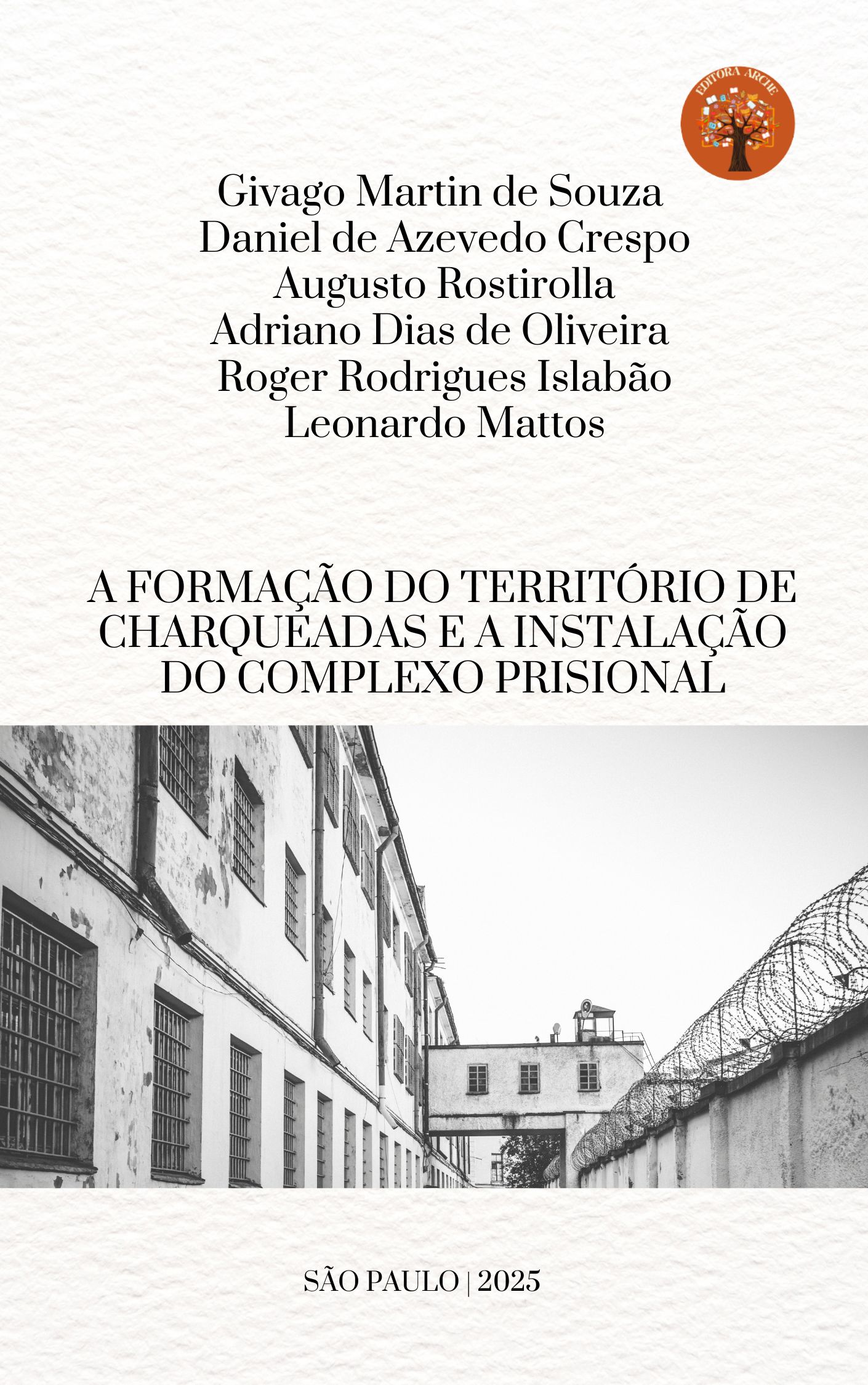
THE FORMATION OF THE CHARQUEADAS TERRITORY AND THE INSTALLATION OF THE PRISON COMPLEX
Keywords:
Sociospatial Development. Construction of Prisons in Small Municipalities. Charqueadas – RS. Public Policies.Abstract
Each territory, whether a municipality, a state, or a region, has its own geography, history, social structures, social actors, and institutions. In the early days of prisons, during the transition from the 18th to the 19th centuries, they were located in the central areas of the largest cities. At the turn of the 20th to the 21st centuries, new possibilities led to their location in more remote areas in small municipalities in the interior. The municipality of Charqueadas, RS, became independent in 1982. Until then, it was a district of São Jerônimo, RS. Before independence, the municipality already had two prisons, but it was after independence that the process began that gave rise to what is now a prison complex, with the municipality having seven prisons. Socio-spatial development should seek more equitable development, observing the territorial dimension of the process and aiming for economic, social, environmental, cultural, territorial, and political sustainability. With the construction of the prison complex, there is also a commuting movement of family members and street vendors on visiting days, especially on weekends. All of them also become consumers in local commerce, stimulating an increase in sales by suppliers of products and services, both direct and outsourced, necessary for the operation of the penitentiaries. The construction of penitentiaries profoundly changes the demographic and economic structure of small municipalities in the interior. The prisoners held there are now added to the local population, which changes the transfer of mandatory resources, such as the FPM. Scientific knowledge about these processes, in addition to allowing advances in the state of the art on new practices related to public policies, will also allow for the discussion of some of the implications related to the use of territory by the Brazilian criminal system.
Downloads
Downloads
Published
How to Cite
License
Atribuição CC BY
