THE CRISIS OF THE BRAZILIAN PRISON SYSTEM AND ALTERNATIVE SOLUTIONS
Keywords:
Penitentiary system. Human and constitutional rights. Penal minimalism. Decentralizing measures.Abstract
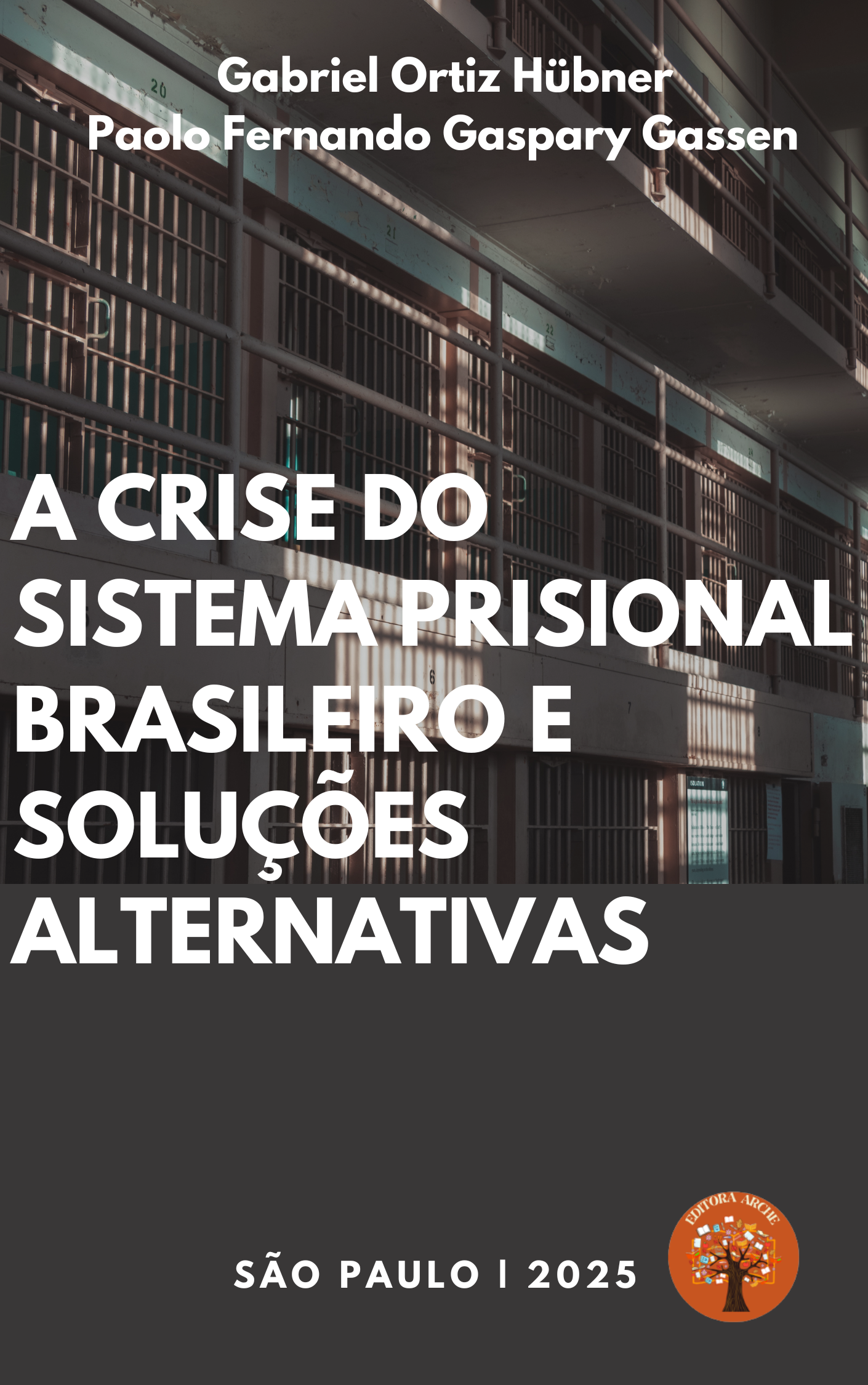
The Brazilian prison system is a mirror that reflects some of the most serious contradictions and challenges faced by contemporary society. Overcrowding, systemic violence, inhumane conditions, lack of access to basic rights, and the perpetuation of crime cycles are just some of the elements that make up a scenario of deep and structural crisis. This book, entitled "The Crisis of the Brazilian Prison System and Alternative Solutions", emerges as a necessary and urgent work, which seeks not only to diagnose the problems, but also to propose critical reflections and viable solutions to one of the most complex and delicate issues in Brazil.
In Chapter 01, "Crisis of the Brazilian Prison System and Alternative Solutions", the reader is led through a detailed analysis of the Brazilian prison reality. With up-to-date data and case studies, the chapter exposes the historical, social, and political roots that led to the collapse of the system. The overcrowding of prisons, the precariousness of facilities, the lack of legal, medical and psychological assistance, and the absence of effective social reintegration programs are some of the topics addressed. In addition, the chapter explores alternative solutions that have been implemented in other countries, such as restorative justice, the decriminalization of certain conducts, the expansion of alternative penalties, and the humanization of criminal treatment. These international experiences serve as inspiration to rethink the Brazilian model.
Chapter 02, "The Unconstitutional State of Things and the Violation of Human Rights", deepens the discussion from the legal and human rights perspective. The concept of "unconstitutional state of affairs", recognized by the Federal Supreme Court (STF) in 2015, is analyzed as a legal framework that evidences the failure of the prison system and the systematic violation of fundamental rights. This chapter examines how the prison crisis affects not only inmates, but also their families and society as a whole, perpetuating inequalities and violence. The analysis also includes a reflection on the role of the State, the Judiciary and civil society in the search for solutions that respect human dignity and constitutional principles.
As a final chapter, with the title, "Minimalism as Penal Policy", the book proposes a paradigm shift in the way the State deals with crime and punishment. Penal minimalism, an approach that advocates minimal intervention by the penal system and prioritization of alternatives to imprisonment, is presented as a viable and humanizing solution. This chapter discusses how reducing mass incarceration, adopting alternative sentences, and implementing restorative practices can contribute to a more just and efficient system. The central idea is that punishment should not be synonymous with exclusion and dehumanization, but rather with accountability and social reintegration.
This book is more than a critical analysis; It is a call to action. It invites the reader to reflect on the values that underlie our society and to question whether the current prison system is really fulfilling its role of promoting justice and security. At the same time, it offers a hopeful look, presenting concrete ways to transform the Brazilian prison reality.
"The Crisis of the Brazilian Prison System and Alternative Solutions" is essential reading for academics, legal professionals, public managers, human rights activists, and everyone who believes in the possibility of a fairer, more humane, and more effective penal system. It is an invitation to rethink the present and build a future in which human dignity is, in fact, the center of all public policies.
The authors,
Gabriel Ortiz Hübner
Paolo Fernando Gaspary Gassen
Downloads
Downloads
Published
How to Cite
License
Atribuição CC BY
