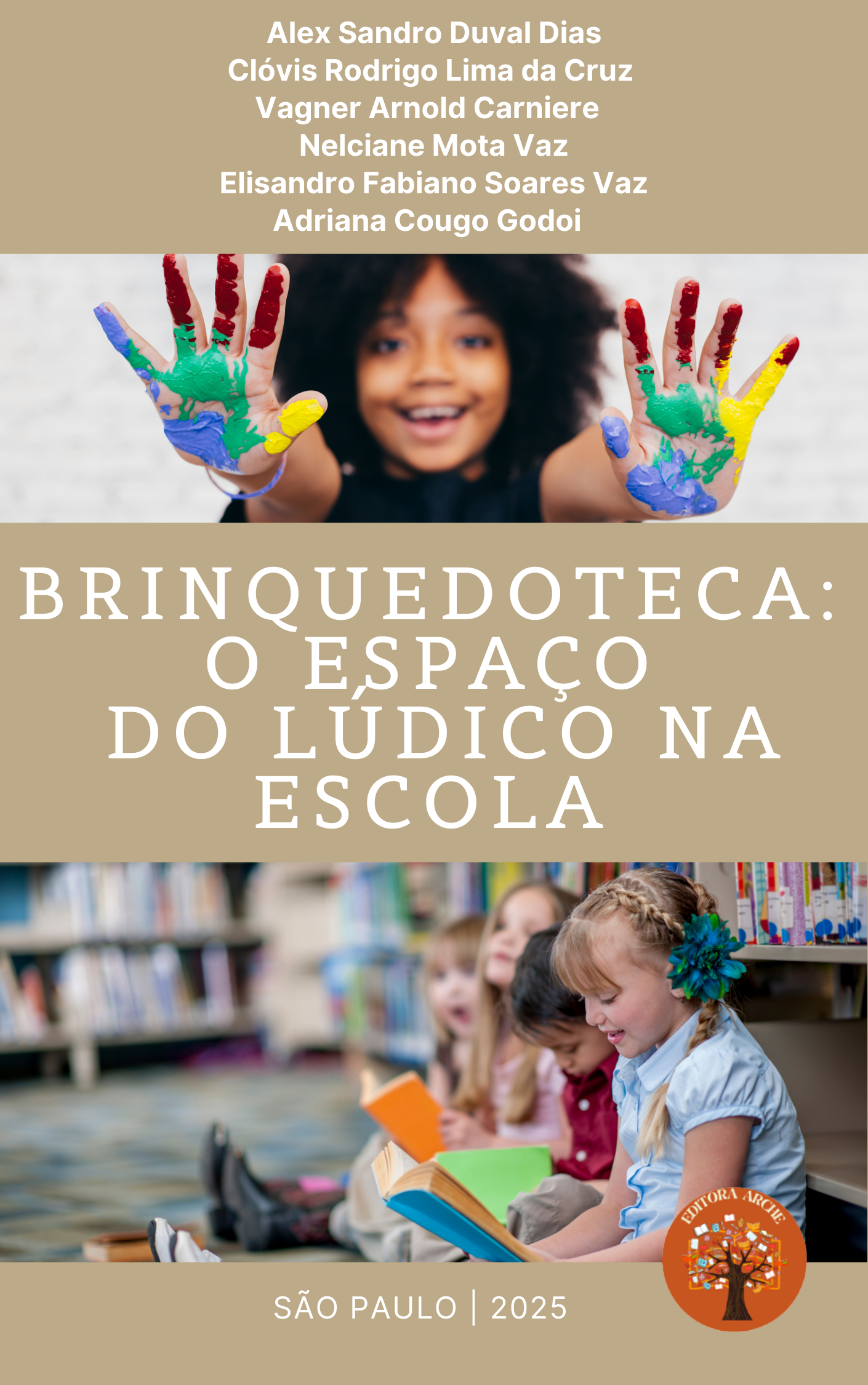
BRINQUEDOTECA: O ESPAÇO DO LÚDICO NA ESCOLA
Palavras-chave:
Brinquedoteca. Educação. Jogo. Ludicidade.Resumo
O livro digital "Brinquedoteca: O Espaço do Lúdico na Escola" foi desenvolvido com o objetivo de explorar a importância do brincar no ambiente escolar, evidenciando o papel fundamental da brinquedoteca, da ludicidade e do jogo no processo de ensino-aprendizagem. A proposta desta obra é apresentar uma visão ampla e fundamentada sobre como esses elementos contribuem para o desenvolvimento integral das crianças, abrangendo aspectos cognitivos, sociais, emocionais e motores.
A brincadeira é uma atividade inerente à infância, sendo considerada um direito fundamental das crianças pela Organização das Nações Unidas (ONU). No contexto escolar, o brincar vai além do simples entretenimento, transformando-se em uma ferramenta pedagógica poderosa que promove o aprendizado significativo e o desenvolvimento das competências socioemocionais. É a partir desse entendimento que este livro digital foi estruturado, dividindo-se em três capítulos complementares e interligados.
No Capítulo 01, intitulado Um Breve Histórico da Brinquedoteca, a obra aborda as origens desse espaço lúdico, desde sua criação na década de 1930 até sua consolidação como ambiente pedagógico nas escolas brasileiras. A brinquedoteca surgiu como uma resposta à necessidade de proporcionar às crianças um local seguro e estimulante para o brincar, onde pudessem desenvolver habilidades sociais, cognitivas e emocionais. Este capítulo traz ainda uma análise sobre as diferentes abordagens adotadas ao longo dos anos e como a brinquedoteca evoluiu para se tornar um espaço essencial no ambiente escolar.
O Capítulo 02, A Ludicidade na Educação, explora como o lúdico pode ser integrado ao currículo escolar de maneira intencional e planejada. A ludicidade, além de tornar o processo de ensino-aprendizagem mais atraente e prazeroso, permite que as crianças aprendam de forma ativa e participativa. Este capítulo discute teorias de grandes estudiosos da educação, como Vygotsky, e apresenta exemplos práticos de atividades lúdicas que podem ser aplicadas em sala de aula, sempre respeitando o ritmo e as necessidades individuais dos alunos.
Já o Capítulo 03, O Jogo na Educação, foca especificamente no uso do jogo como metodologia pedagógica. O jogo, além de promover o aprendizado de conteúdos específicos, estimula o desenvolvimento de habilidades importantes, como o raciocínio lógico, a criatividade e o trabalho em equipe. Este capítulo apresenta diferentes tipos de jogos educativos, desde os tradicionais até os digitais, demonstrando como cada um deles pode ser utilizado para enriquecer as práticas pedagógicas.
Ao longo de toda a obra, o leitor encontrará uma abordagem teórica sólida, fundamentada em pesquisas recentes e respaldada por exemplos práticos do cotidiano escolar. O objetivo é oferecer aos educadores, gestores escolares e demais profissionais da educação um material rico e inspirador, que possa ser utilizado como referência no planejamento de atividades lúdicas e no desenvolvimento de projetos pedagógicos.
Além disso, o livro digital também visa sensibilizar as famílias para a importância do brincar na infância. Ao envolver os responsáveis nas atividades lúdicas, é possível fortalecer os vínculos familiares e ampliar as oportunidades de aprendizado fora da escola, contribuindo para uma formação mais completa e integral das crianças.
Por fim, "Brinquedoteca: O Espaço do Lúdico na Escola" reforça a ideia de que a educação de qualidade vai além da transmissão de conteúdos teóricos. É fundamental que as escolas promovam ambientes acolhedores e estimulantes, onde o brincar seja valorizado e integrado ao processo educativo. Espera-se que esta obra inspire práticas pedagógicas mais humanizadas, onde o aprendizado aconteça de forma natural, leve e significativa, sempre respeitando o direito da criança de ser criança.
Downloads
Downloads
Publicado
Licença
Atribuição CC BY
