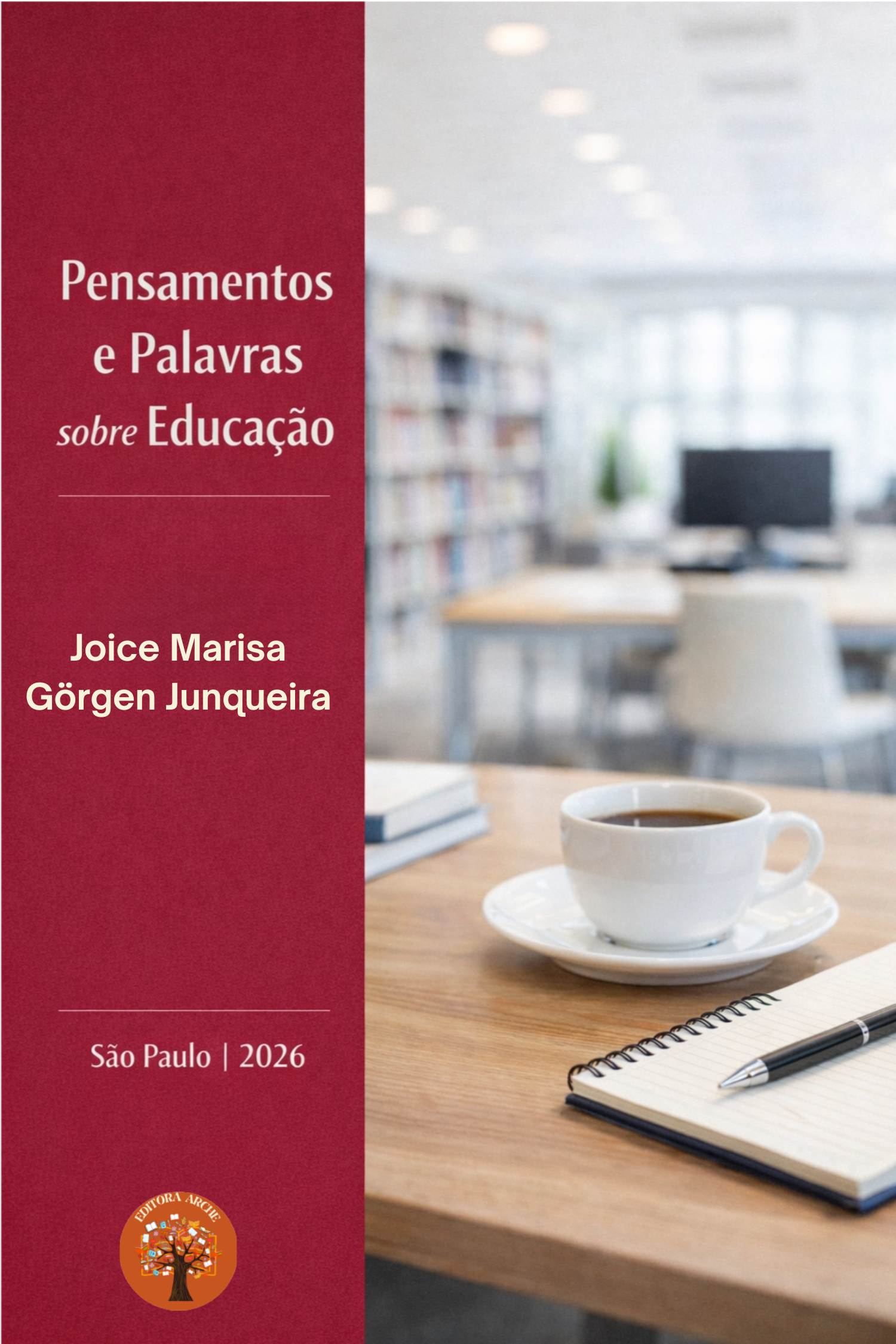
THOUGHTS AND WORDS ON EDUCATION
Keywords:
Inclusive Education. Pedagogical Practices. Human Development.Abstract
The book Thoughts and Words on Education arises from the meeting of different researchers, teachers, and professionals committed to the school, to human development, and to the contemporary challenges of teaching and learning. It is a work built by many hands, bringing together reflections that engage with the diversity of themes, experiences, and perspectives that permeate the educational field. In times of profound social, cultural, and technological transformations, the chapters presented here reaffirm education as a space of right, of critical construction of knowledge, and of collective responsibility. Each text, in its own way, expresses the effort to think about pedagogical practice, educational policies, inclusion, languages, technologies, and the meanings of teaching, composing a plural mosaic of voices that unite in favor of a democratic, ethical, and socially committed education.
Below is a brief summary of each chapter, highlighting its main contributions to the contemporary educational debate.
The first chapter, "The Neuroscience Perspective on the Implications of ADHD on Emotions," analyzes how affective aspects, impulsivity, and emotional regulation permeate learning processes, articulating neuroscientific contributions to contemporary pedagogical challenges in the school context.
The second chapter, "Ethnomathematics in the Teaching-Learning Process of Inclusive Mathematics for Students with ADHD," discusses inclusive practices in mathematics teaching, highlighting cultural and methodological approaches that broaden learning possibilities for students with different cognitive profiles.
The third chapter, "Collaborative Teaching as an Inclusive Pedagogical Practice in the Amazonian Context," emphasizes the importance of teacher mediation and collective work in building inclusive educational practices, articulating assistive technologies and institutional commitment to the right to learning. The fourth chapter, Music Education in Brazil: Decoloniality, Participatory Digital Culture, and Emerging Technologies, presents a critical analysis of Brazilian music education, challenging Eurocentric paradigms and advocating for plural pedagogical practices connected to cultural realities and new digital ecologies.
The fifth chapter, Lifelong Learning as a Human Right of Older Adults, addresses active aging and access to formal, non-formal, and informal education, discussing normative frameworks, social challenges, and the need for inclusive policies that guarantee dignity and participation.
The sixth chapter, Continuing Education and Creative Learning in Public Schools, problematizes the relationship between pedagogical innovation and teacher training, advocating for school experiences based on authorship, projects, and creative practices supported by public policies.
The seventh chapter, Neuroscience and Learning: Contributions to Educational Practice, discusses contributions of neuroscience to pedagogical planning and to the construction of educational resources more aligned with the cognitive and affective processes of learning. The ninth chapter, "Didactic Resources in Inclusive Special Education: An Analysis of their Applicability in the School Context of Students with Intellectual Disabilities," analyzes pedagogical strategies and support materials that promote autonomy, participation, and cognitive development, reaffirming that inclusion requires planning and intentionality on the part of teachers.
The tenth chapter, "Digital Literacy as a Social and School Practice: Much More Than Knowing How to Use Technology," problematizes digital literacy as a cultural and critical dimension of contemporary education, articulating school, citizenship, and emerging technologies in the construction of subjects capable of interpreting and producing meaning in the digital environment.
Together, the chapters reaffirm education as a living field of reflection and social commitment, offering the reader multiple perspectives on the challenges and possibilities of the contemporary school. Thus, this collection aims to contribute to academic debate and educational practice, bringing together thoughts and words that recognize the transformative power of education.
Downloads
Downloads
Published
How to Cite
License
Atribuição CC BY
