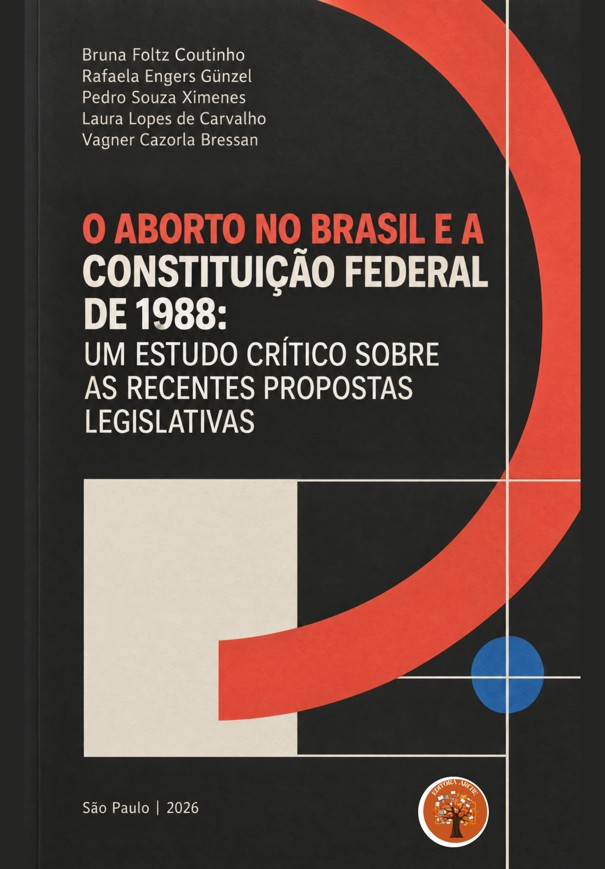
ABORTION IN BRAZIL AND THE 1988 FEDERAL CONSTITUTION: A CRITICAL STUDY OF RECENT LEGISLATIVE PROPOSALS
DOI:
https://doi.org/10.51891/rease.vi.32064Keywords:
Abortion, Fundamental rights, 1988 Federal ConstitutionAbstract
Abortion stands as one of the most sensitive and controversial topics within the scope of Brazilian criminal law—not only due to the legal complexity surrounding the protection of the legal interest at stake (life itself), but also because of the moral, social, and public health implications that permeate the debate. The controversy lies, above all, in the constant tension between the unborn child’s right to life and the pregnant woman’s fundamental rights—specifically regarding human dignity, reproductive autonomy, and the right to health—resulting in a conflict between fundamental rights.
Historically, the criminalization of abortion in Brazil, solidified by the 1940 Penal Code, prioritized the protection of the unborn child to the detriment of a woman’s health and autonomy. However, with the advent of the 1988 Federal Constitution, the principle of human dignity—along with the right to health—gained greater prominence as a normative foundation capable of justifying, in certain circumstances, the non-criminalization of the voluntary termination of pregnancy. Conversely, the continued criminalization forces women to undergo the procedure under unsafe and degrading conditions, exposing them to medical, psychological, and social risks—particularly within the context of the socioeconomic vulnerability so prevalent in our country. In this light, Brazilian constitutional jurisprudence has, in significant rulings, acknowledged the centrality of a woman’s dignity in decisions regarding the termination of pregnancy, reaffirming that the State cannot impose disproportionate sacrifices upon pregnant women, especially when their fundamental rights are at stake.
Analyzing this issue, therefore, requires a multidisciplinary approach—one that encompasses not only the legal and criminal aspects but also the ethical, political, and public health dimensions involved. Normative discourse cannot detach itself from factual reality: the clandestine nature of abortion, far from solving the problem, intensifies structural inequalities and contributes to the marginalization of the most vulnerable women.
In this context, recent bills currently under consideration in the National Congress—such as Bill 1904/2024 and Bill 1920/2024, which seek to impose harsher criminal penalties for abortion, and Bill 2521/2024 and Bill 3974/2024, which propose mechanisms to protect reproductive rights—reveal a profound ideological rift within the legislative process. More than mere technical disagreements, these bills reflect a moral dispute disguised as legislative activity, often driven by electoral interests, religious appeals, and a lack of scientific grounding.
This paper offers a critical analysis of these legislative proposals in light of the 1988 Federal Constitution, with particular attention to the constitutional principles of human dignity, proportionality, strict legality in criminal law, and the secular nature of the State. It aims to demonstrate that the unrestricted criminalization of abortion—especially in extreme circumstances such as sexual violence—constitutes an affront to fundamental rights, transforming criminal law into an instrument of gender-based oppression, at odds with the social and legal progress observed in other democratic nations.
Downloads
Downloads
Published
License
Atribuição CC BY
