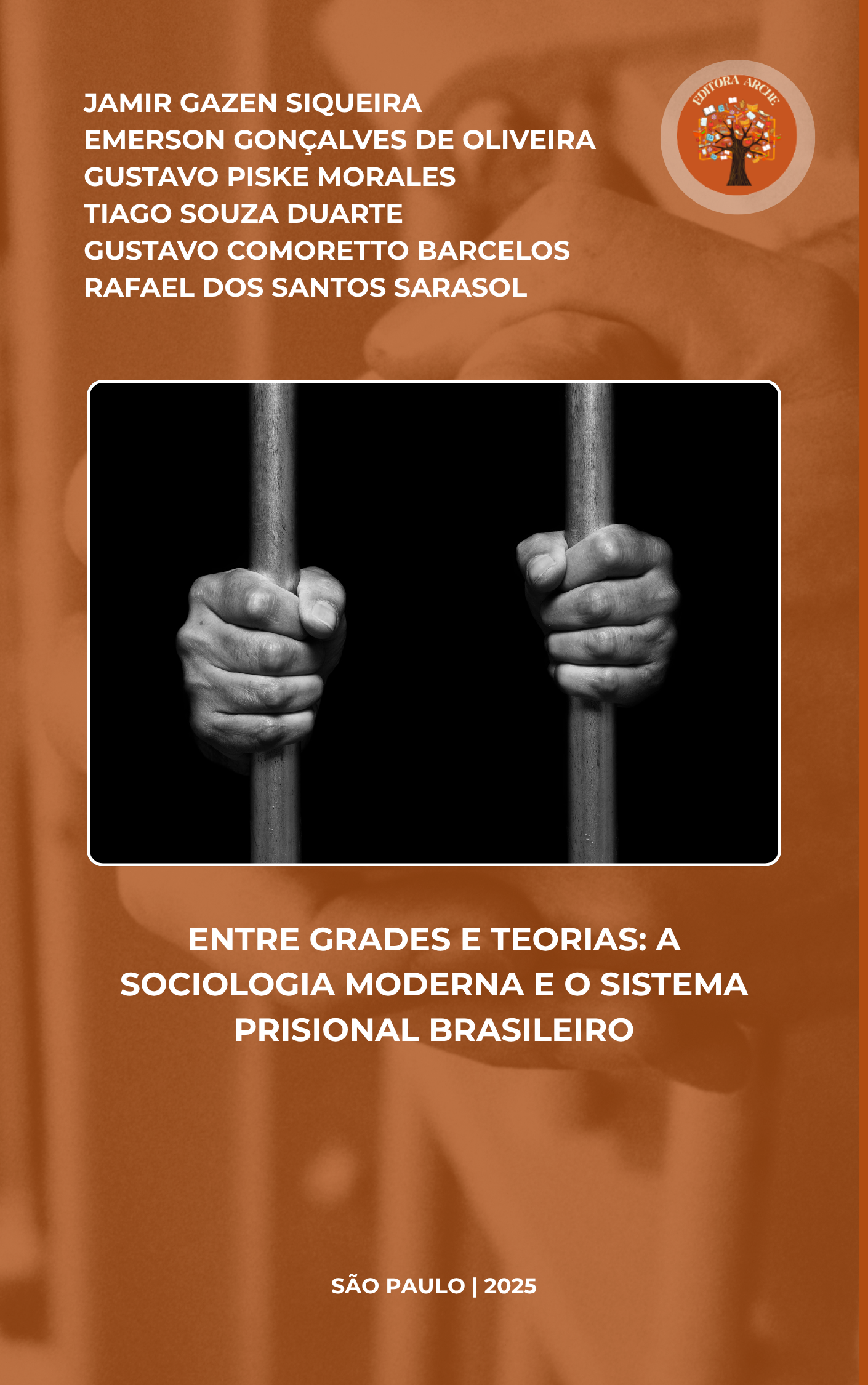
ENTRE GRADES E TEORIAS: A SOCIOLOGIA MODERNA E O SISTEMA PRISIONAL BRASILEIRO
Palavras-chave:
Sistema Prisional Brasileiro. Ressocialização. Controle Social.Resumo
Este livro propõe uma análise crítica do sistema prisional brasileiro à luz dos principais conceitos da sociologia moderna. A prisão é abordada como uma instituição que exerce controle social seletivo, reproduzindo desigualdades históricas e estruturais. A partir de autores como Foucault, Bauman, Wacquant e Beccaria, discute-se como o cárcere funciona não apenas como espaço de punição, mas como mecanismo de exclusão e marginalização. A população carcerária brasileira, composta majoritariamente por jovens negros e pobres, evidencia a seletividade penal e o racismo estrutural. Além disso, o artigo examina a falência da função ressocializadora da pena, a lógica disciplinar presente nas instituições prisionais e a complexa estrutura de poder que envolve facções, agentes estatais e a precariedade das unidades. A análise revela que o sistema prisional serve à manutenção da ordem social vigente, mais do que à recuperação dos indivíduos. Por fim, propõe-se a necessidade de reformas profundas, com foco em políticas públicas eficazes, alternativas penais e uma abordagem interdisciplinar que rompa com o paradigma punitivista dominante.
Downloads
Downloads
Publicado
Licença
Atribuição CC BY
